Beautiful or Meaningful?

Sometimes we view artwork with subconscious beliefs that prevent us from truely appreciating it. These same beliefs can also block us from creating art or expressing our true creative nature in everyday life. What kind of beliefs am I talking about?

  • It has to be beautiful
  • It has to look like something real
  • I don’t understand abstract art
  • It has to be decorative
  • It has to be sellable or useful
  • It costs too much
  • I’m not good at it, I’m not creative, etc.

None of these beliefs are true unless you believe them! Unfortunately, we’re mostly not aware of our subconscious beliefs and how they impact our conscious thoughts, emotions, and actions. When there is discord between conscious thoughts and subconscious beliefs it creates a block in the ability to actualize what we want. That block might look like this:

“I wish I could draw and paint.”
“I wish I was more creative.”
“I wish I could sell my art.”
“It’s no use.”
“What’s the point?”

It might also take the form of being critical or synical toward the art and creativity of others. A block because of discordant beliefs and desires creates frustration, disappointment, and unnecessary stress.

Beauty is in the Eye of the Believer

Beauty, meaningfulness, and usefulness are all relative concepts. Who taught you what is beautiful, meaningful, useful, or valuable? Most likely it was your parents, friends, family, teachers, religion, the culture you were raised in, and the media you consume.

We develop subconscious concepts and beliefs about everything in life (including ourselves) as we grow up. The important thing is to become aware of them and question their validity in order to create a belief system that supports your highest good. Who do you really want to be? What do you want your life to look like? You are the only one who can make it happen, and it will happen according to your beliefs and actions.

Meaningful is related to your core values

Self-discovery is really important if you want to be happy and live a fulfilling life. Maybe you have artistic talent but you’ve never really enjoyed making art. You never found a direction or purpose for it in your life so you put it aside for a long time. You pursued a career that would support your lifestyle, but it didn’t make you happy. You look at art with mixed feelings like longing, regret, appreciation, confusion, frustration or disassociation.

It all goes back to this conflict between our subconscious beliefs, our core values and our thoughts and actions. The two methods of self-discovery and healing the conflict that I have found most helpful are expressive art therapy and PSYCH-K®.

A brief look at why they work:

Expressive Art Therapy: These creative processes, especially non-verbal ones, allow the subconscious to surface. Creativity helps both sides of your brain connect which enhances internal growth, insight, and learning. You begin to identify your core values and a direction that will bring greater fulfillment.

PSYCH-K®: This process helps to identify specific blocks or problems in your life and what you really want (the opposite of the problem). Through the PSYCH-K® Balance process the left and right sides of your brain will start working together to replace unhelpful thought patterns with beliefs that will support the life you truly want. It also helps to reduce stress, which helps you to be more open, positive, and joyful.
Expressive Art Group Practice

Although we are all born with creative ability, practice is required to develop it. This is where most people get discouraged and fail to fulfill their creative desires and potential. We think it should be easy or automatic. We imagine that the talented people have genes that let them whip out masterpieces as soon as they get an inspiration.

Enjoying the Process is the Key

All those myths about inspiration, the creative muse, and talent are just excuses people tell themselves because they’re not enjoying the process. We feel frustrated when our artwork doesn’t meet our expectations. We tend to tell ourselves that there’s something wrong with us when we start to struggle. When we’re alone, struggle can be disempowering.

But, there’s nothing wrong with you! Getting frustrated, feeling blocked, and making a mess are a natural part of growing and learning. Struggle is purposeful because it can lead to great insights. It can actually be your friend and mentor if you let it.

A creative practice is a journey better walked together

The solution to struggle is to get new input, see from a different perspective. We can do this by practicing together with others! Struggle is overcome very quickly when you’re surrounded by the encouragement and stimulating ideas of others. Creativity multiplies exponentially when it bounces between people, and it’s a lot more fun!

Developing your creativity is the journey of becoming the co-creator of your life. Only you can figure out who you are and what you want your life (or art) to be, but we learn and benefit from each other.

New Expressive Art Group Practice

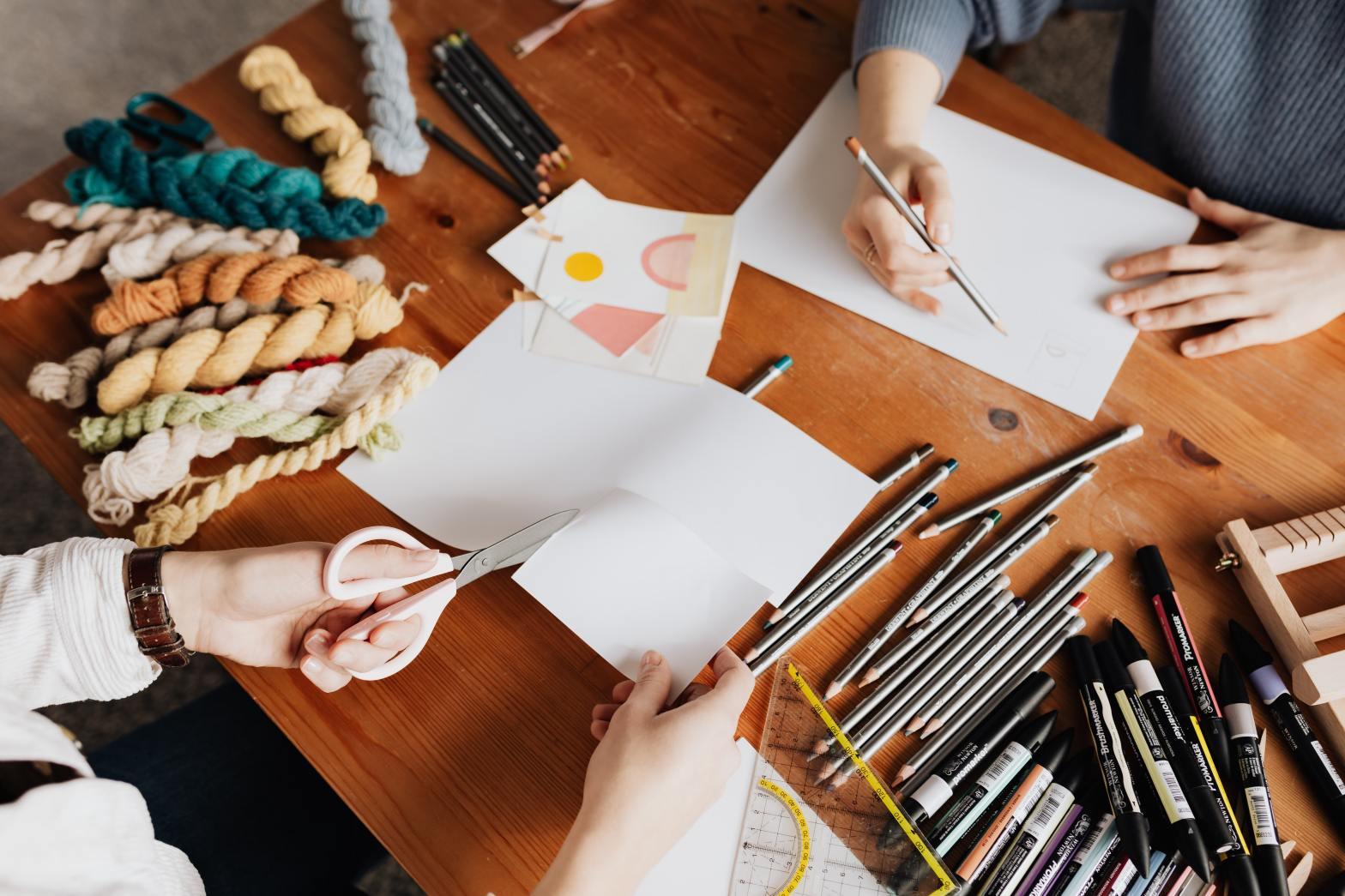
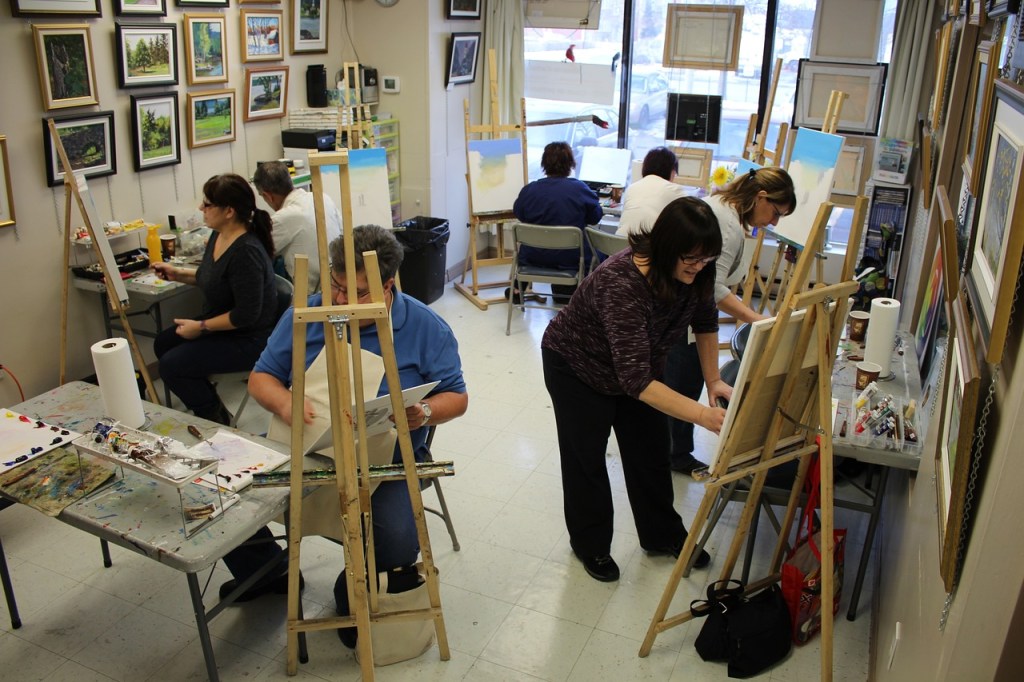
In this group we will explore how art-making can help us express our hidden potential and open doorways to fulfilling our life goals. Various media, tools and methods will be used and new skills introduced. Most supplies provided but you can bring your own if you wish.

Many creative arts are practiced as a group such as: theatre, film, dance, music, even writing. It’s mostly visual arts, like drawing and painting, that we think of as a solo endeavour. In this group we will each create our own work though responding to the same prompts. We will share our insights, inspiration and methods with each other. Doing creative activities together is more fun and adds to what we get out of it.

This group will run one day per week for six weeks, then two weeks off. New sign ups are open every six weeks, and discounts for returning group members. Each 6 week session will be different. The group will be structured with specific projects to inspire your creative journey. $140 for the 6 week session. All materials supplied but you can bring your own if you wish. Concession available.

Singn up or inquire:

← Back

Thank you for your response. ✨

Warning
Warning
Interested in the group practice?(required)

Warning
Warning
Warning.

Mixed Media Collage

Mixed media is exactly what it sounds like: using more than one type of media to creat a piece of art. So, you might be doing a painting in acrylic and decide to add some line work with oil pastels or ink. Or maybe you have some tissue paper painted with black and white shapes and you decide those will add contrast in your design. There are a lot of possibilities with mixed media.

Collage has many possibilities too but it’s not always mixed media. You can create a collage just with photos, or just with paper, or you can use a variety of art media, textiles, or found objects. Now we’re talking endless possibilities.

Limits Can Be Helpful

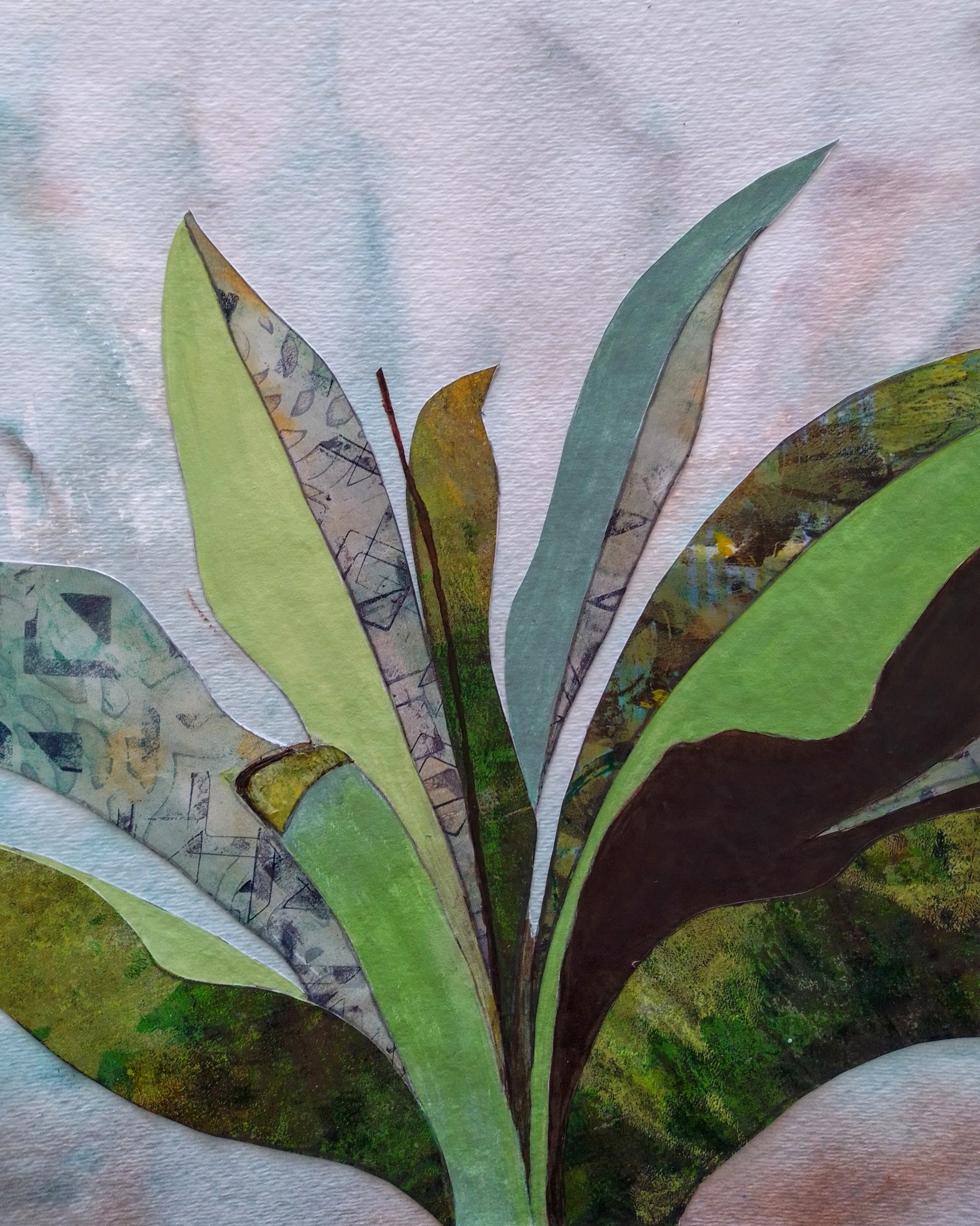
When I create I like to give myself a few limits because it allows intuitive flow by reducing decision making. So when creating this mixed media collage I started with a simple line drawing. Then I cut up Gelli prints that I had previously made into the shapes of the leaves (or half the leaf) of this plant.

At a certian point I decided not to use Gelli prints for the whole image, but to paint the other half of the leaves with acrylic paint. When the collage of the plant was done I realized it needed a background other than white paper, so I cut it out from the white paper. I created a soft wispy watercolor background and after it dried I glued the collaged plant onto it.

Creative pace and processing

None of these decisions were planned out ahead of time because I believe that reponding to each stage of the work is the best way to let the creative juices flow.

  1. I responded to the line drawing with Gelli prints.
  2. I responded to the Gelli prints with acrylic paint.
  3. I responded to the finished plant image with a watercolor background and finishing touches.

Although it sounds quite simple, and it is… I didn’t do it all in one session. I do things a little at a time over a period of days, sometimes weeks, giving myself time between each session to observe, feel, and process what I’m creating. I let it talk to me so I can respond.

Some people may process faster and do things quickly and that’s fine. Everyone’s different and I allow myself to go at my own pace because that’s what works for me.

Some things to consider:

Are you a slow or fast processor?
Do you prefer to plan things out or work spontaniously?
Do you start with a fixed idea or are you open to possibilities?
Can you be flexible with expectations and outcomes?
Will you allow yourself time to enjoy the process?