I only discovered this a couple years ago and I don’t do it very often. However, after trying it I decided it was worth adding to my creative toolkit. I get bored easily so I like having different creative practices to choose from when I want to do an art warm-up or a Mindfulness practice.
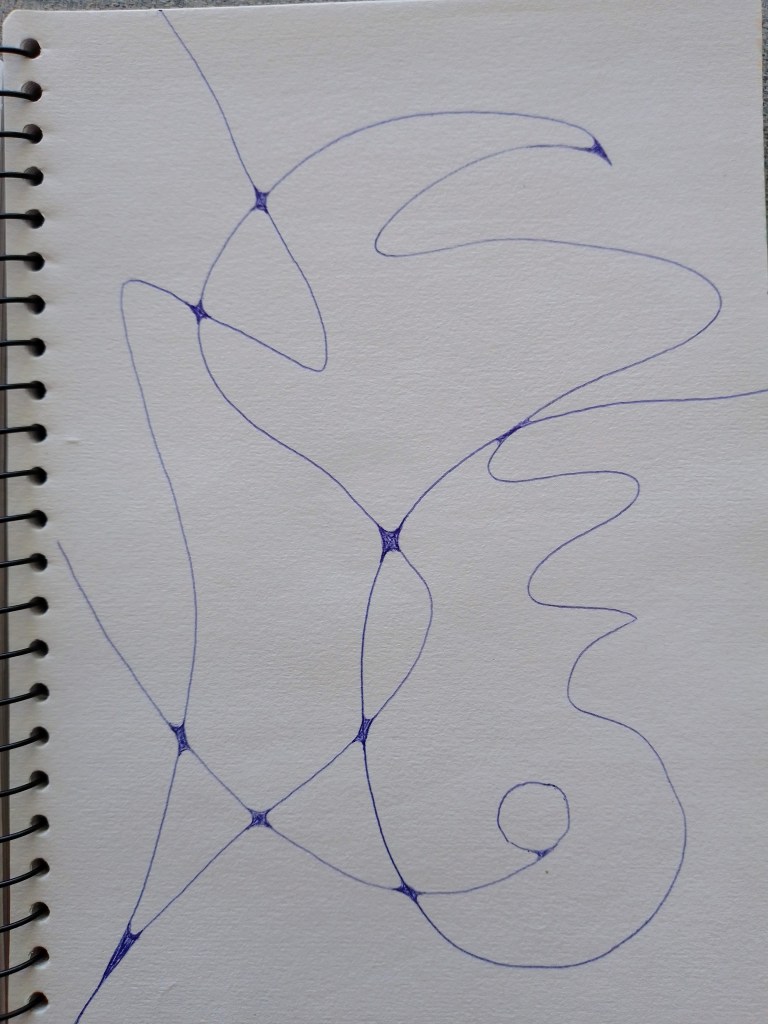
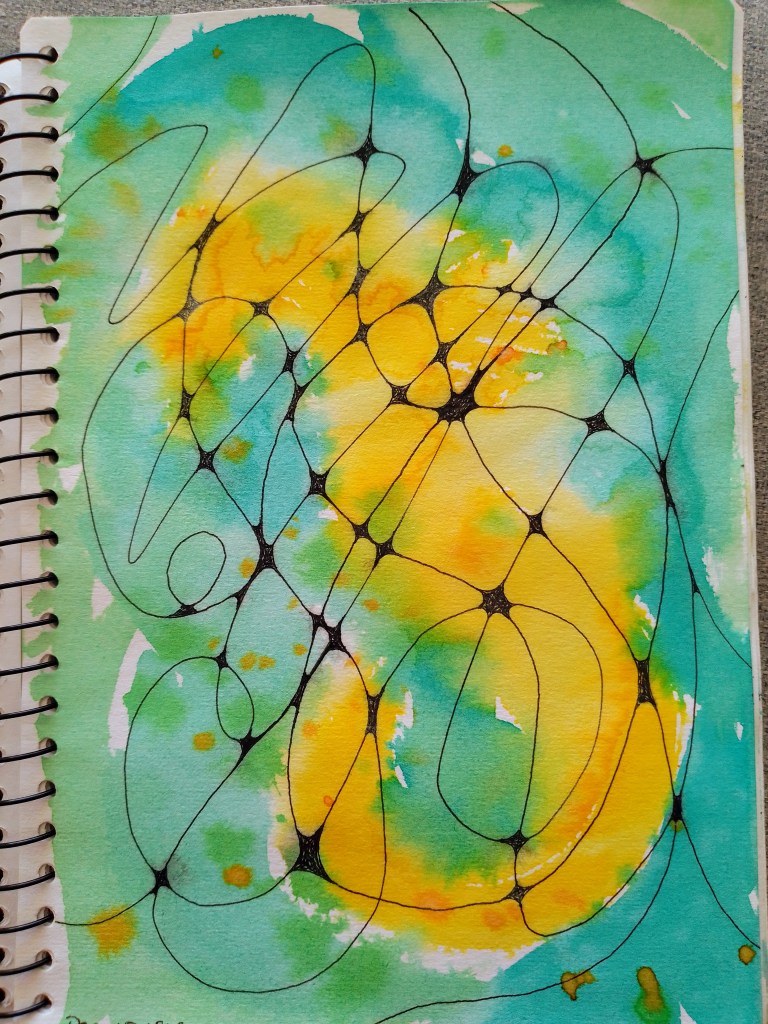
Neurographica is a drawing technique that you could say starts with a random scribble or doodle. There are three rules for the lines:
- Begin and end a line at the page edges
- Draw the line intuitively not following a repeated pattern or design
- Wherever the lines cross forming corners you will round the corners so there are no points.
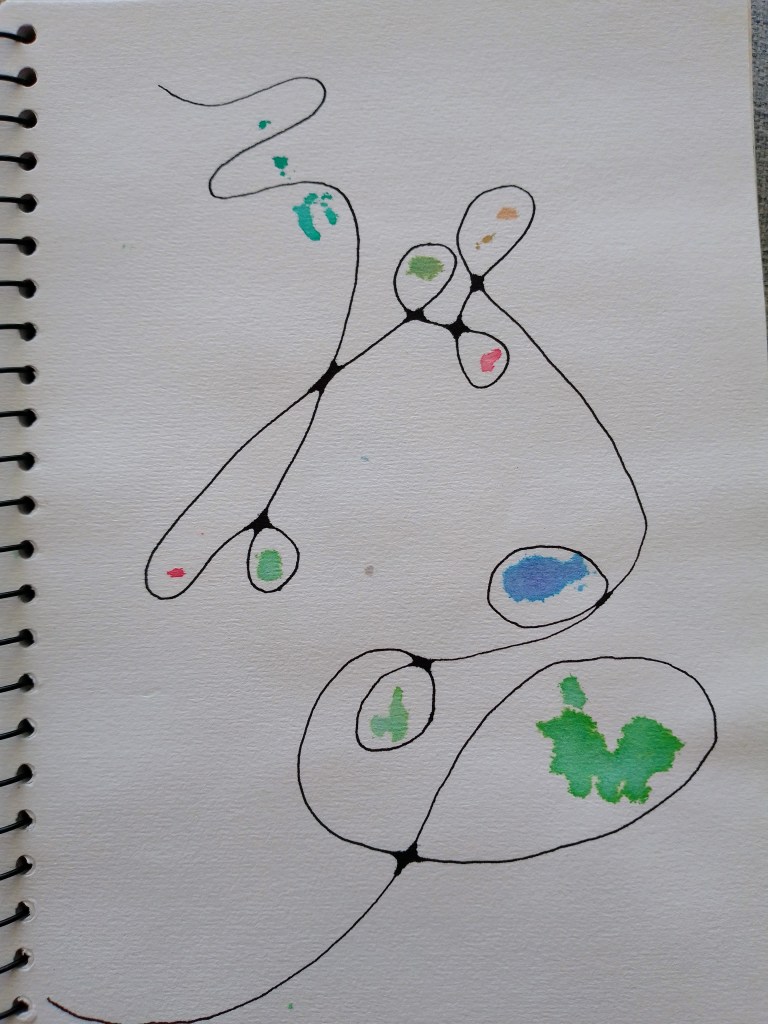
You can see in the first and third images below that I disobeyed a couple rules. (I can be naughty at times!)
Some Explination From Neurographic Academy
“Neurographica® Theory is built on solid scientific principles, combining visual thinking with the laws and patterns identified by various schools of psychology. Namely: neuropsychology, analytical psychology, Gestalt psychology, Psychosynthesis, social psychology and modern management theory.” – Neurographica website
“Neurographica® is a unique art method that immediately puts your mind in a relaxed state of flow, synergistically connecting your subconscious with your fingers as you draw.” – Neurographica website
You will find all the information you need to get started with this technique on the website links above, plus much better examples than mine. I wanted to include the statements from their website because they can explain it much better than I can. I have not taken any of their courses.
My Experience With Neurographica
My understanding is that the places where lines cross represent the stressors and problems in your life. By rounding the corners or points you are smoothing out the pathways between neural connections wich allows greater flow and reduces stress. Now, keep in mind, I think I heard that on a YouTube video, not the official website. I’m sure there’s more to it and there are plenty of free tutorials on YouTube that you can check out like I did.
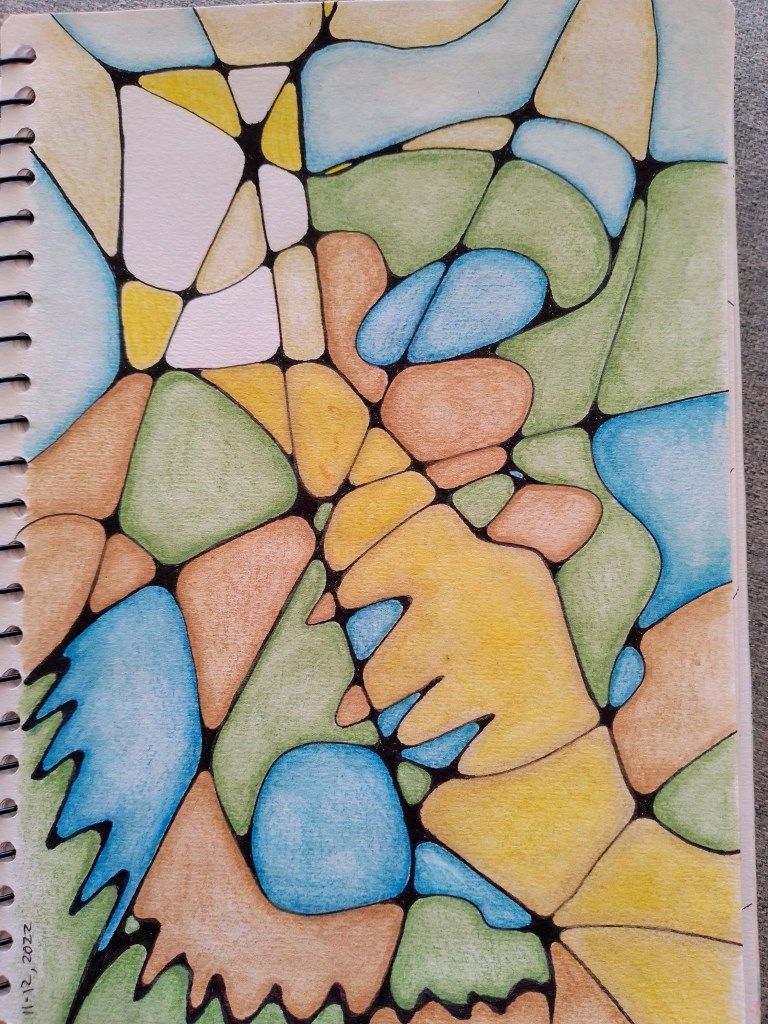
I will say that rounding the corners is stress reducing but slightly boring (remember I get bored easily). The more complex images above I did gradually over a period of days, maybe 10 or 15 minutes a day. The lines and corners are done first, then you can add color if you want to.
In the second image above I used colored pencils and followed what appeared to me as I colored. In the large image above I used watercolor, because when I looked at the black and white drawing I saw a seahorse. I thought a watercolor background would emphasize the seahorse image.
I happen to really love seahorses so I decided to look up their symbolic meaning. Appearantly it depends on which tradition you draw from or which website you go to. There are a plethora of possibilities, but here are a few:
- patience, persistence, creativity, protection, harmony, and contentment
- magic, good luck, masculine power, strength, balance, and peace
That sounds good enough to me. I was happy with these experiences because I felt it did tap into my subconscious mind and allow something to flow.
I occasionally use Neurographica drawing in my daily practice sketchbook as a way to relieve stress and stay creative. Because of the intuitive drawing aspect, lack of expectations, and open ended process, it allows the mind to enter a state of exploration and discovery. It’s a good way to relax and open the mind to possibilities.
 Heart Beat of the Soul