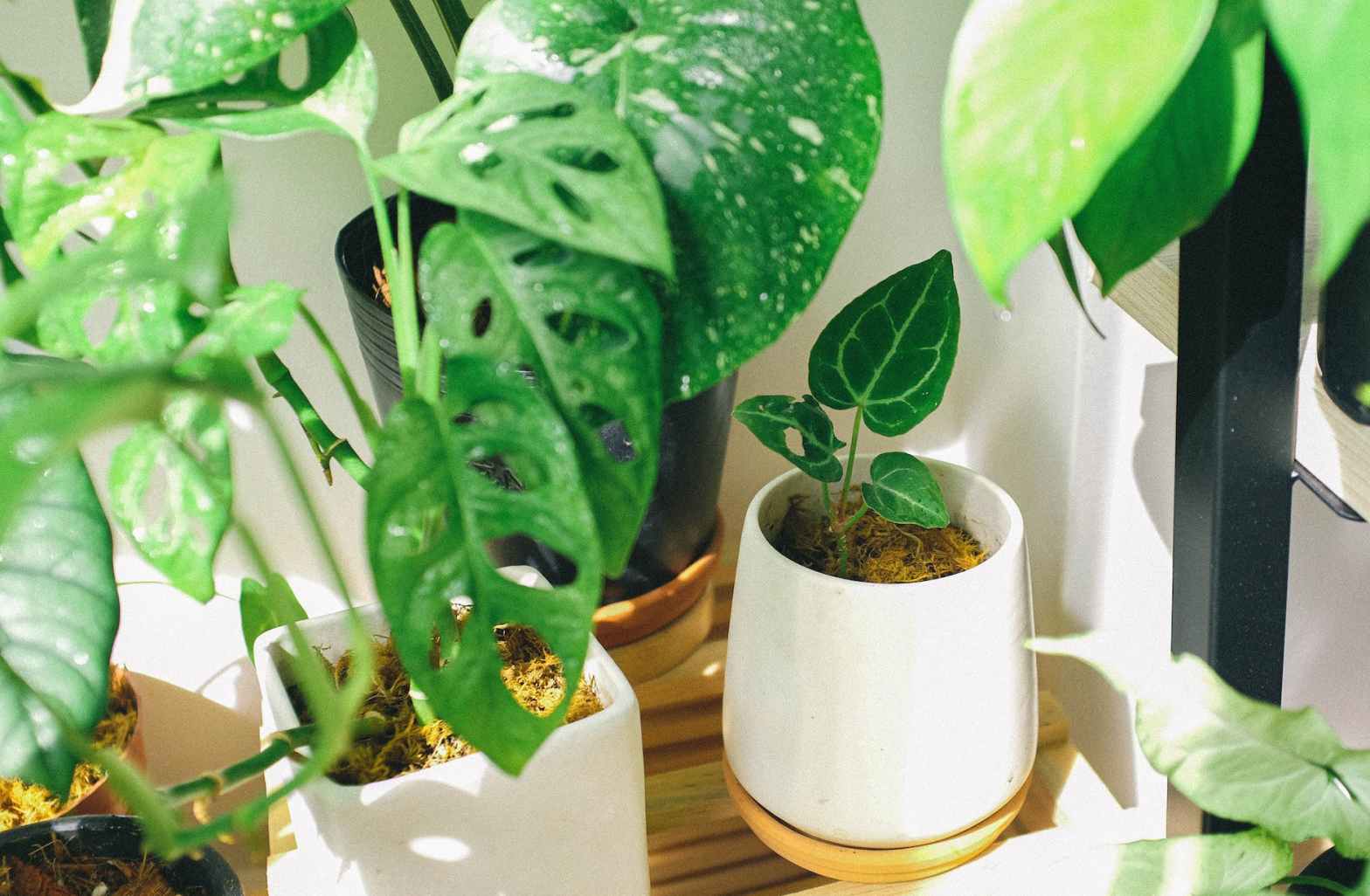
Contour drawing is a skill you learn when you take any basic drawing class. I learned it in middle school, but adapted it later in life as a mindfulness coping skill. The way I learned contour drawing was to look at the subject matter and not the paper (called blind contour drawing), then move the pencil (or other drawing tool) as your eye follows the outline of the subject. This developes eye-hand coordination.
I adapted this to a coping skill in two ways. First as a meditative or Mindfulness practice, whenever I felt undue stress or anxiety, I would follow the outline of any object that was near me with my eyes only, not drawing. This is calming and focusing. It also develops an appreciation of line, shape and form. But mostly, it’s grounding, connects you to the here and now.
Meditating With Plants
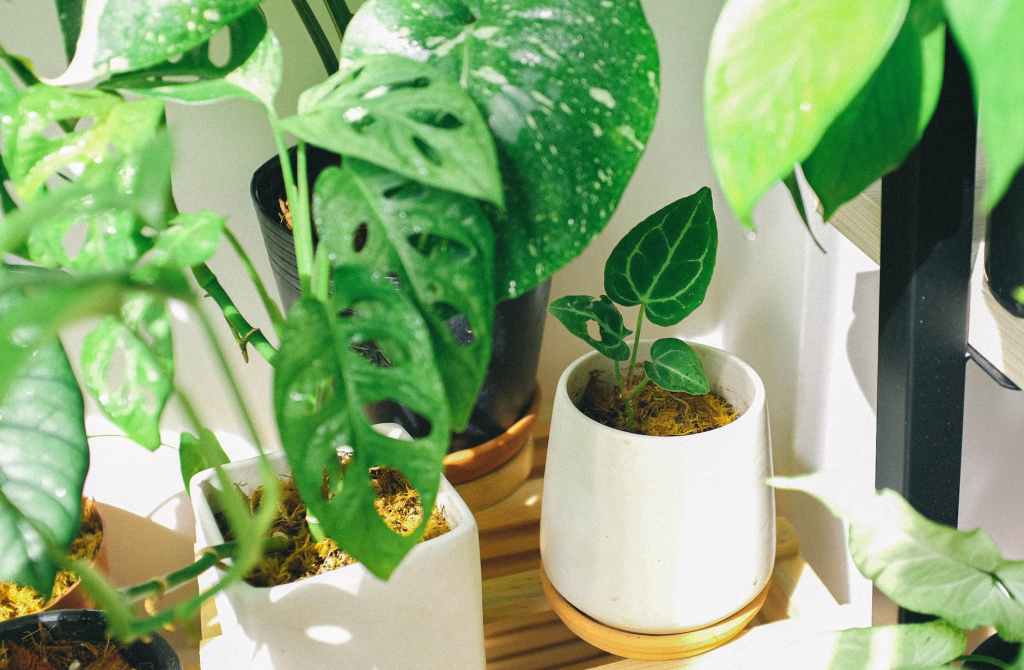
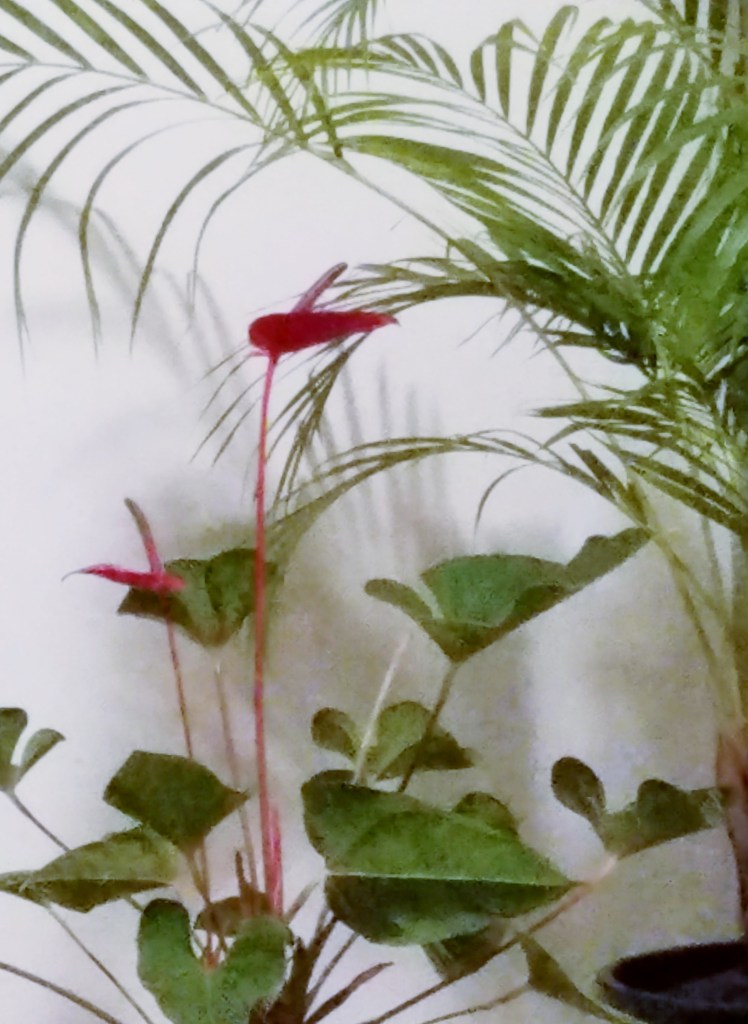
The second way is that I have used blind contour drawing of plants as a meditative practice. I have a lot of potted plants, most with big curvey leaves that twist and turn. As the leaves and stems twist and turn they make very interesting shapes. Following the outline of the plant with a pen or pencil requires no thinking. If you look at the drawing while you are drawing you start thinking, judging and making decisions. Instead, if you loosen your focus and let go of thoughts and expectations, focusing only on the plant outline your hand and pen will automatically follow your eyes around the shapes of the leaves and stems of the plant.
This is not meant to be a realistic or detailed drawing. You can use either positive or negative shapes in this practice. (Negative shapes are the spaces between objects.) A ball point pen is a great tool for this because of it’s smooth glide, but you can use any drawing tool and paper. This is also often used as a warm-up practice for art-making.
Try it!
I find that focusing on plants is very healing and comforting. If you’ve had trouble meditating in the past you might try this practice. It’s similar to using the breath in meditation, it focuses your mind on one simple and very natural thing, the percieved lines of the plant or the spaces between.

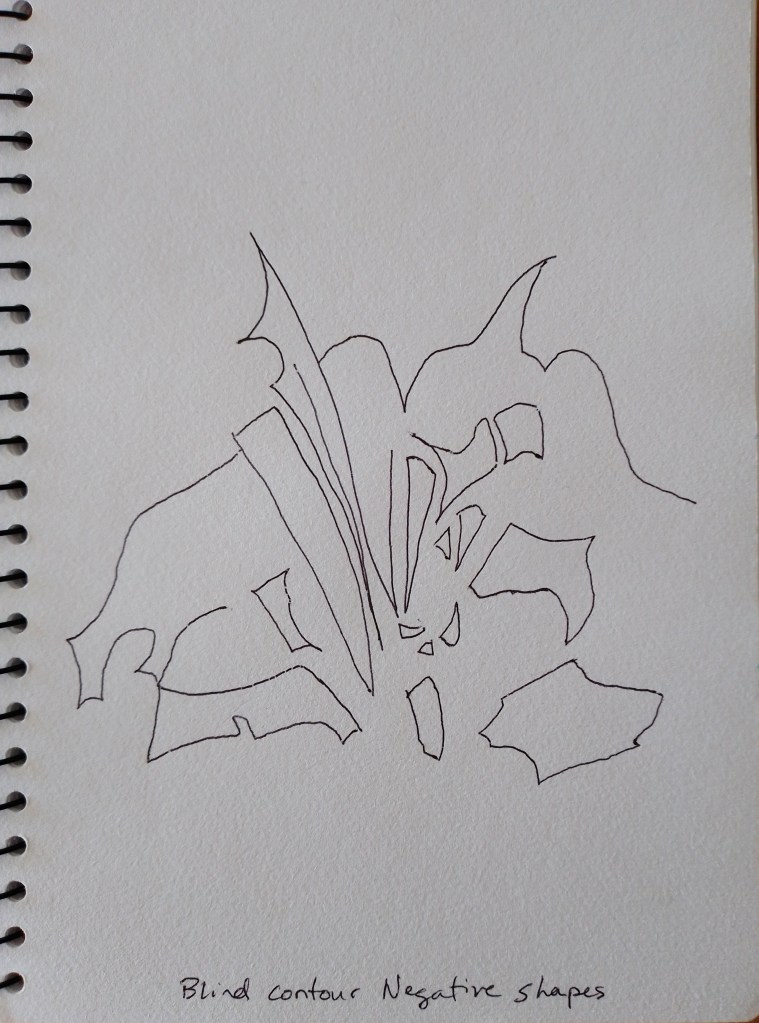
Looking at the same plant from positive shape and negative shape perspectives.
 Heart Beat of the Soul